Sunday, February 14, 2016

Boswell’s Life of Johnson: 109


Edited by Dan Leo, LL.D., Assistant Professor of Comic Book Studies; Assistant Women’s Track and Field Coach, Olney Community College; author of Bozzie and Dr. Sam: The Body of Wits, the Olney Community College Press.

Art direction by rhoda penmarq (layout, pencils, inks, cgi, and colorization by eddie el greco; lettering by roy dismas) for penmarq/hi-tone™ productions.

to begin at the beginning, click here

for previous chapter, click here


I met him at Drury-lane play-house in the evening. Sir Joshua Reynolds, at Mrs. Abington's request, had promised to bring a body of wits to her benefit; and having secured forty places in the front boxes, had done me the honour to put me in the group. Johnson sat on the seat directly behind me; and as he could neither see nor hear at such a distance from the stage, he was wrapped up in grave abstraction, and seemed quite a cloud, amidst all the sunshine of glitter and gaiety.

I wondered at his patience in sitting out a play of five acts, and a farce of two. He said very little; but after the prologue to Bon Ton had been spoken, which he could hear pretty well from the more slow and distinct utterance, he talked of prologue-writing, and observed,


'Dryden has written prologues superiour to any that David Garrick has written; but David Garrick has written more good prologues than Dryden has done. It is wonderful that he has been able to write such variety of them.'

At Mr. Beauclerk's, where I supped, was Mr. Garrick, whom I made happy with Johnson's praise of his prologues. Garrick, however, when he pleased, could imitate Johnson very exactly; for that great actor, with his distinguished powers of expression which were so universally admired, possessed also an admirable talent of mimickry. He was always jealous that Johnson spoke lightly of him. I recollect his exhibiting him to me one day, saying, 'Davy has some convivial pleasantry about him, but 'tis a futile fellow;' which he uttered perfectly with the tone and air of Johnson.


Next day I dined with Johnson at Mr. Thrale's. He attacked Gray, calling him 'a dull fellow.'

BOSWELL. 'I understand he was reserved, and might appear dull in company; but surely he was not dull in poetry.'

JOHNSON. 'Sir, he was dull in company, dull in his closet, dull every where. He was dull in a new way, and that made many people think him GREAT.'

He then repeated some ludicrous lines, which have escaped my memory.


'No, Sir, there are but two good stanzas in Gray's poetry, which are in his Elegy in a Country Church-yard.'

He then repeated the stanza, 'For who to dumb forgetfulness a prey,' &c. 

He added, 'The other stanza I forget.'

A young lady who had married a man much her inferiour in rank being mentioned, a question arose how a woman's relations should behave to her in such a situation. While I contended that she ought to be treated with an inflexible steadiness of displeasure, Mrs. Thrale was all for mildness and forgiveness, and, according to the vulgar phrase, 'making the best of a bad bargain.'


JOHNSON. 'Madam, we must distinguish. Were I a man of rank, I would not let a daughter starve who had made a mean marriage; but having voluntarily degraded herself from the station which she was originally entitled to hold, I would support her only in that which she herself had chosen; and would not put her on a level with my other daughters. You are to consider, Madam, that it is our duty to maintain the subordination of civilized society; and when there is a gross and shameful deviation from rank, it should be punished so as to deter others from the same perversion.'


On Friday, March 31, I supped with him and some friends at a tavern. One of the company attempted, with too much forwardness, to rally him on his late appearance at the theatre; but had reason to repent of his temerity. 

'Why, Sir , did you go to Mrs. Abington's benefit? Did you see?' 

JOHNSON. 'No, Sir.' 

'Did you hear?' 

JOHNSON. 'No, Sir.' 

'Why then, Sir, did you go?' 

JOHNSON. 'Because, Sir, she is a favourite of the publick; and when the publick cares the thousandth part for you that it does for her, I will go to your benefit too.'


Next morning I won a small bet from lady Diana Beauclerk, by asking him as to one of his particularities, which her Ladyship laid I durst not do. It seems he had been frequently observed at the Club to put into his pocket the Seville oranges, after he had squeezed the juice of them into the drink which he made for himself. Beauclerk and Garrick talked of it to me, and seemed to think that he had a strange unwillingness to be discovered. We could not divine what he did with them; and this was the bold question to be put. I saw on his table the spoils of the preceding night, some fresh peels nicely scraped and cut into pieces.


'O, Sir, (said I,) I now partly see what you do with the squeezed oranges which you put into your pocket at the Club.'

JOHNSON. 'I have a great love for them.'

BOSWELL. 'And pray, Sir, what do you do with them? You scrape them, it seems, very neatly, and what next?'

JOHNSON. 'Let them dry, Sir.'

BOSWELL. 'And what next?'

JOHNSON. 'Nay, Sir, you shall know their fate no further.'


BOSWELL. 'Then the world must be left in the dark. It must be said (assuming a mock solemnity,) he scraped them, and let them dry, but what he did with them next, he never could be prevailed upon to tell.'

JOHNSON. 'Nay, Sir, you should say it more emphatically:— he could not be prevailed upon, even by his dearest friends, to tell.'

He had this morning received his Diploma as Doctor of Laws from the University of Oxford. He did not vaunt of his new dignity, but I understood he was highly pleased with it.


I observed to him that there were very few of his friends so accurate as that I could venture to put down in writing what they told me as his sayings.

JOHNSON. 'Why should you write down my sayings?'

BOSWELL. 'I write them when they are good.'

JOHNSON. 'Nay, you may as well write down the sayings of any one else that are good.'

But where, I might with great propriety have added, can I find such?


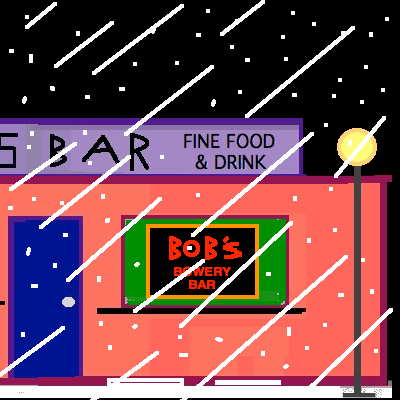
(classix comix is brought to you by Bob’s Bowery Bar™, at the northwest corner of Bleecker and the Bowery: “Chilled to the bone in your inadequately heated cold-water shotgun flat? Why not do what I do and wrap yourself up in your old army overcoat, tramp over to Bob’s Bowery Bar and enjoy a great steaming tankard of Bob’s famous ‘hot sailor’s grog’.

After two or three of those babies you might even have to take your coat off!” – Horace P. Sternwall, host of Bob’s Bowery Bar Presents the Philip Morris Commander Variety Hour, featuring Tony Winston & his Winstonians with Shirley De LaSalle and the Betty Baxter Dancers, co-starring Angus Strongbow and Miss Hyacinth Wilde, Wednesdays at 9pm (EST), exclusively on the Dumont Television Network.)


part 110


Sunday, February 7, 2016

Boswell’s Life of Johnson: 108


Edited by Dan Leo, LL.D., Associate Professor of Graphic Biographical Studies; Assistant Women’s Indoor Volleyball Coach, Olney Community College; author of Bozzie and Dr. Sam: The Ghost of Goldsmith, the Olney Community College Press.

Artwork and layout personally supervised by rhoda penmarq (design, pencils, inks, colors by eddie el greco; lettering by roy dismas ) for penmarqoboliq™ productions.

to begin at the beginning, click here

for previous chapter, click here


To JAMES BOSWELL, ESQ.

'DEAR SIR,

'I am sorry that I could get no books for my friends in Scotland. Mr. Strahan has at last promised to send two dozen to you. If they come, put the names of my friends into them; you may cut them out, and paste them with a little starch in the book.

'In the mean time, the bookseller says that the sale is sufficiently quick. They printed four thousand. Correct your copy wherever it is wrong, and bring it up. Your friends will all be glad to see you. I think of going myself into the country about May.

'I am sorry that I have not managed to send the book sooner. I have left four for you, and do not restrict you absolutely to follow my directions in the distribution. You must use your own discretion.


'Make my compliments to Mrs. Boswell: I suppose she is now just beginning to forgive me.

'I am, dear Sir, your humble servant,

'SAM. JOHNSON.'

'Feb. 25, 1775.'


On Tuesday, March 21, I arrived in London; and on repairing to Dr. Johnson's before dinner, found him in his study, sitting with Mr. Peter Garrick, the elder brother of David, strongly resembling him in countenance and voice, but of more sedate and placid manners. Both at this interview, and in the evening at Mr. Thrale's, where he and Mr. Peter Garrick and I met again, he was vehement on the subject of the Ossian controversy; observing,


'We do not know that there are any ancient Erse manuscripts; and we have no other reason to disbelieve that there are men with three heads, but that we do not know that there are any such men.'

He also was outrageous, upon his supposition that my countrymen 'loved Scotland better than truth,' saying,

'All of them,— nay not all,— but droves of them, would come up, and attest any thing for the honour of Scotland.'

He also persevered in his wild allegation, that he questioned if there was a tree between Edinburgh and the English border older than himself. I assured him he was mistaken, and suggested that the proper punishment would be that he should receive a stripe at every tree above a hundred years old, that was found within that space. He laughed, and said, 'I believe I might submit to it for a banbee!' {“banbee”: halfpenny – Ed.}


The doubts which, in my correspondence with him, I had ventured to state as to the justice and wisdom of the conduct of Great-Britain towards the American colonies, while I at the same time requested that he would enable me to inform myself upon that momentous subject, he had altogether disregarded; and had recently published a pamphlet, entitled, Taxation no Tyranny; an answer to the Resolutions and Address of the American Congress.

He had long before indulged most unfavourable sentiments of our fellow-subjects in America. For, as early as 1769, I was told by Dr. John Campbell, that he had said of them,


'Sir, they are a race of convicts, and ought to be thankful for any thing we allow them short of hanging.'

Of this performance I avoided to talk with him; for I had now formed a clear and settled opinion, that the people of America were well warranted to resist a claim that their fellow-subjects in the mother-country should have the entire command of their fortunes, by taxing them without their own consent; and the extreme violence which it breathed, appeared to me so unsuitable to the mildness of a Christian philosopher, and so directly opposite to the principles of peace which he had so beautifully recommended in his pamphlet respecting Falkland's Islands, that I was sorry to see him appear in so unfavourable a light. Besides, I could not perceive in it that ability of argument, or that felicity of expression, for which he was, upon other occasions, so eminent. Positive assertion, sarcastical severity, and extravagant ridicule, which he himself reprobated as a test of truth, were united in this rhapsody.


His pamphlets in support of the measures of administration were published on his own account, and he afterwards collected them into a volume, with the title of Political Tracts, by the Authour of the Rambler.  

These pamphlets drew upon him numerous attacks. Against the common weapons of literary warfare he was hardened; but there were instances of animadversion which I communicated to him, and from what I could judge, both from his silence and his looks, appeared to me to impress him much.


However confident of the rectitude of his own mind, Johnson may have felt sincere uneasiness that his conduct should be erroneously imputed to unworthy motives, by good men; and that the influence of his valuable writings should on that account be in any degree obstructed or lessened.

He complained to a Right Honourable friend of distinguished talents and very elegant manners, with whom he maintained a long intimacy, that his pension having been given to him as a literary character, he had been applied to by administration to write political pamphlets; and he was even so much irritated, that he declared his resolution to resign his pension. His friend shewed him the impropriety of such a measure, and he afterwards expressed his gratitude, and said he had received good advice. To that friend he once signified a wish to have his pension secured to him for his life; but he neither asked nor received from government any reward whatsoever for his political labours.


On Friday, March 24, I met him at the LITERARY CLUB, where were Mr. Beauclerk, Mr. Langton, Mr. Colman, Dr. Percy, Mr. Vesey, Sir Charles Bunbury, Dr. George Fordyce, Mr. Steevens, and Mr. Charles Fox. Before he came in, we talked of his Journey to the Western Islands, and of his coming away 'willing to believe the second sight,' which seemed to excite some ridicule. I was then so impressed with the truth of many of the stories of it which I had been told, that I avowed my conviction, saying,

'He is only willing to believe: I do believe. The evidence is enough for me, though not for his great mind. What will not fill a quart bottle will fill a pint bottle. I am filled with belief.'


'Are you? (said Colman,) then cork it up.'


I found his Journey the common topick of conversation in London at this time, wherever I happened to be.

At one of Lord Mansfield's formal Sunday evening conversations, strangely called Levees, his Lordship addressed me, 'We have all been reading your travels, Mr. Boswell.'

I answered, 'I was but the humble attendant of Dr. Johnson.'

The Chief Justice replied, with that air and manner which none, who ever saw and heard him, can forget, 'He speaks ill of nobody but Ossian.'


Johnson was in high spirits this evening at the club, and talked with great animation and success. He attacked Swift, as he used to do upon all occasions. I wondered to hear him say of Gulliver's Travels,

'When once you have thought of big men and little men, it is very easy to do all the rest.'

From Swift, there was an easy transition to Mr. Thomas Sheridan.

— JOHNSON. 'Sheridan is a wonderful admirer of the tragedy of Douglas, and presented its authour with a gold medal.


Some years ago, at a coffee-house in Oxford, I called to him, "Mr. Sheridan, Mr. Sheridan, how came you to give a gold medal to Home, for writing that foolish play?" This, you see, was wanton and insolent; but I meant to be wanton and insolent. A medal has no value but as a stamp of merit. And was Sheridan to assume to himself the right of giving that stamp? Sheridan had no right to give a stamp of merit: it was counterfeiting Apollo's coin.'


On Monday, March 27, I breakfasted with him at Mr. Strahan's. He told us, that he was engaged to go that evening to Mrs. Abington's benefit.


'She was visiting some ladies whom I was visiting, and begged that I would come to her benefit. I told her I could not hear: but she insisted so much on my coming, that it would have been brutal to have refused her.'

This was a speech quite characteristical. He loved to bring forward his having been in the gay circles of life; and he was, perhaps, a little vain of the solicitations of this elegant and fashionable actress.

Mr. Strahan talked of launching into the great ocean of London, in order to have a chance for rising into eminence; and, observing that many men were kept back from trying their fortunes there, because they were born to a competency, said, 'Small certainties are the bane of men of talents;' which Johnson confirmed.


Mr. Strahan put Johnson in mind of a remark which he had made to him;

'There are few ways in which a man can be more innocently employed than in getting money.'

'The more one thinks of this, (said Strahan,) the juster it will appear.'

Mr. Strahan had taken a poor boy from the country as an apprentice, upon Johnson's recommendation. Johnson having enquired after him, said,

'Mr. Strahan, let me have five guineas on account, and I'll give this boy one. Nay, if a man recommends a boy, and does nothing for him, it is sad work. Call him down.'


I followed him into the court- yard, behind Mr. Strahan's house; and there I had a proof of what I had heard him profess, that he talked alike to all. 'Some people tell you that they let themselves down to the capacity of their hearers. I never do that. I speak uniformly, in as intelligible a manner as I can.'

'Well, my boy, how do you go on?'

'Pretty well, Sir; but they are afraid I an't strong enough for some parts of the business.'


JOHNSON. 'Why I shall be sorry for it; for when you consider with how little mental power and corporeal labour a printer can get a guinea a week, it is a very desirable occupation for you. Do you hear,— take all the pains you can; and if this does not do, we must think of some other way of life for you. There's a guinea.'

Here was one of the many, many instances of his active benevolence. At the same time, the slow and sonorous solemnity with which, while he bent himself down, he addressed a little thick short-legged boy, contrasted with the boy's aukwardness and awe, could not but excite some ludicrous emotions.  


(classix comix is sponsored by Bob’s Bowery Bar™, conveniently located at the northwest corner of Bleecker and the Bowery: “’Be of Good Cheer’ reads the legend which greets the clientèle of Bob’s Bowery Bar, and what better way to induce a state of the most mellow felicity than to avail oneself of Bob’s famous prix-fixe Sunday brunch,

featuring all-you-can-eat buttermilk flapjacks, fresh-baked groatcakes, organic scrapple, nitrate-free bacon, Mom’s baked beans ‘n’ fatback, fried mush, biscuits ‘n’ red-eye gravy, creamed chipped beef on your choice of sourdough or challah toast, and eggs ‘any style’? What a ‘steal’ at $3.95!” – Horace P. Sternwall, host of Bob’s Bowery Bar Presents the Philip Morris Commander Comedy Cavalcade, featuring Tony Winston & his Winstonians with Shirley De LaSalle and the Betty Baxter Dancers, Tuesdays at 10pm (EST), exclusively on the Dumont Television Network.)


part 109


Sunday, January 31, 2016

Boswell’s Life of Johnson: 107


Edited by Dan Leo, LL.D., Associate Professor of Biographical Studies; Assistant Women’s Water Polo Coach, Olney Community College; author of Bozzie and Dr. Sam: The Case of the Impudent Lout, the Olney Community College Press.

Art direction by rhoda penmarq (layout, pencils, inks, coloring by eddie el greco; lettering by roy dismas ) for penmarqitroniq productions™.

to begin at the beginning, click here

for previous chapter, click here


His Journey to the Western Islands of Scotland is a most valuable performance. It abounds in extensive philosophical views of society, and in ingenious sentiment and lively description. A considerable part of it, indeed, consists of speculations, which many years before he saw the wild regions which we visited together, probably had employed his attention, though the actual sight of those scenes undoubtedly quickened and augmented them. Mr. Orme, the very able historian, agreed with me in this opinion, which he thus strongly expressed:— 


'There are in that book thoughts, which, by long revolution in the great mind of Johnson, have been formed and polished like pebbles rolled in the ocean!'

That he was to some degree of excess a true-born Englishman, so as to have entertained an undue prejudice against both the country and the people of Scotland, must be allowed. But it was a prejudice of the head, and not of the heart. He had no ill-will to the Scotch; for, if he had been conscious of that, he would never have thrown himself into the bosom of their country, and trusted to the protection of its remote inhabitants with a fearless confidence.


His remark upon the nakedness of the country, from its being denuded of trees, was made after having travelled two hundred miles along the eastern coast, where certainly trees are not to be found near the road; and he said it was 'a map of the road' which he gave. 

His disbelief of the authenticity of the poems ascribed to Ossian, a Highland bard, was confirmed in the course of his journey, by a very strict examination of the evidence offered for it; and although their authenticity was made too much a national point by the Scotch, there were many respectable persons in that country, who did not concur in this; so that his judgement upon the question ought not to be decried, even by those who differ from him. 


Johnson's grateful acknowledgements of kindnesses received in the course of this tour, completely refute the brutal reflections which have been thrown out against him, as if he had made an ungrateful return; and his delicacy in sparing in his book those who we find from his letters to Mrs. Thrale were just objects of censure, is much to be admired. 

His private letters to Mrs. Thrale, written during the course of his journey, which therefore may be supposed to convey his genuine feelings at the time, abound in such benignant sentiments towards the people who showed him civilities, that no man whose temper is not very harsh and sour, can retain a doubt of the goodness of his heart. 


It is painful to recollect with what rancour he was assailed by numbers of shallow irritable North Britons, on account of his supposed injurious treatment of their country and countrymen, in his Journey. And let me add, that, citizen of the world as I hold myself to be, I have that degree of predilection for my natale solum {“native soil” – Ed.}, nay, I have that just sense of the merit of an ancient nation, which has been ever renowned for its valour, which in former times maintained its independence against a powerful neighbour, and in modern times has been equally distinguished for its ingenuity and industry in civilized life, that I should have felt a generous indignation at any injustice done to it.


Johnson treated Scotland no worse than he did even his best friends, whose characters he used to give as they appeared to him, both in light and shade. Some people, who had not exercised their minds sufficiently, condemned him for censuring his friends. But Sir Joshua Reynolds, whose philosophical penetration and justness of thinking were not less known to those who lived with him, than his genius in his art is admired by the world, explained his conduct thus:

'He was fond of discrimination, which he could not show without pointing out the bad as well as the good in every character; and as his friends were those whose characters he knew best, they afforded him the best opportunity for showing the acuteness of his judgement.'


He expressed to his friend Mr. Windham of Norfolk, his wonder at the extreme jealousy of the Scotch, and their resentment at having their country described by him as it really was; when, to say that it was a country as good as England, would have been a gross falsehood. 

'None of us, (said he), would be offended if a foreigner who has travelled here should say, that vines and olives don't grow in England.' 

And as to his prejudice against the Scotch, which I always ascribed to that nationality which he observed in them, he said to the same gentleman, 'When I find a Scotchman, to whom an Englishman is as a Scotchman, that Scotchman shall be as an Englishman to me.' 


His intimacy with many gentlemen of Scotland, and his employing so many natives of that country as his amanuenses, prove that his prejudice was not virulent; and I have deposited in the British Museum, amongst other pieces of his writing, the following note in answer to one from me, asking if he would meet me at dinner at the Mitre, though a friend of mine, a Scotchman, was to be there:— 

'Mr. Johnson does not see why Mr. Boswell should suppose a Scotchman less acceptable than any other man. He will be at the Mitre.'


My much-valued friend Dr. Barnard, now Bishop of Killaloe, having once expressed to him an apprehension, that if he should visit Ireland he might treat the people of that country more unfavourably than he had done the Scotch; he answered, with strong pointed double-edged wit,

'Sir, you have no reason to be afraid of me. The Irish are not in a conspiracy to cheat the world by false representations of the merits of their countrymen. No, Sir; the Irish are a FAIR PEOPLE;— they never speak well of one another.'


(This series is made possible by a continuing grant from the Bob’s Bowery Bar Foundation for the Propagation of Art and Literature™: “Looking for a good Sunday brunch at a price honest working men and women can afford? Allow me to recommend Bob’s Bowery Bar, conveniently located at the northwest corner of Bleecker and the Bowery, where, at the risibly low price of $3.95, you can avail yourself of the ‘Hungry Poet’s Special’,

consisting of a heaping plate of home fries, sausage, bacon, blood pudding, scrapple, fried tomatoes, baked beans, two free range eggs ‘any style’ and your choice of challah or 12-grain toast!” – Horace P. Sternwall, host of Bob’s Bowery Bar Presents the Philip Morris Commander Poetry Hour, broadcast live from Bob’s Bowery Bar Mondays at 4pm (EST), exclusively on the Dumont Radio Network.)


part 108


Sunday, January 24, 2016

Selections from Samuel Johnson’s Dictionary: “X, Y, Z”


Edited by Dan Leo, LL.D., Associate Professor of Remedial Lexicography, Assistant Snowboarding Team Coach, Olney Community College; author of Bozzie and Dr. Sam: The Case of the Valiant Valetudinarian; the Olney Community College Press.

Art direction by rhoda penmarq for penmarqitron studios™ (pencils, inks, colors and layout by roy dismas; lettering started by eddie el greco and completed by roy dismas).

to begin selections from Samuel Johnson's Dictionary, click here

for previous selection from Samuel Johnson's Dictionary, click here

to begin at the beginning of Boswell's Life of Johnson, click here

for previous chapter of Boswell's Life of Johnson, click here


***

X is a letter, which, though found in Saxon words, begins no word in the English language.

***


Yare.  Ready; dextrous; eager.


I do desire to learn, Sir; and I hope, if you have occasion to use me for your turn, you shall find me yare.  Shakespeare.


*** 


To Yarr.  To growl or snarl like a dog.


*** 


Yell.  A cry of horrour.


Others in frantick mood

Run howling through the streets; their hideous yells

Rend the dark welkin.  Philips. 


*** 


Yellowhammer.  A bird.


****

To Yelp.  To bark as a beagle-hound after his prey.

****

Yesterday.  On the day last past.

****

Young.  Being in the first part of life; not old.

      I firmly am resolv'd
Not to bestow my youngest daughter,
Before I have a husband for the elder.  Shakespeare

****

Yule.  The time of Christmas.

****


 Zany.  One employed to raise laughter by his gestures, actions and speeches; a merry Andrew; a buffoon.


****

Zealot.  One passionately ardent in any cause. Generally used in dispraise.

****

Zed.  The name of the letter z.

Thou whoreson zed, thou unnecessary letter.  Shakespeare.

****

Zenith.  The point over head opposite to the nadir.


Fond men! if we believe that men do live

Under the zenith of both frozen poles,

Though none come thence, advertisement to give,

Why bear we not the like faith of our souls?  Davies. 


**** 


Zephyr.  The west wind; and poetically any calm soft wind.

            They are as gentle

As zephyrs blowing below the violet.  Shakespeare's Cymbeline.


****


Zest.  The peel of an orange squeezed into wine.


**** 


Zodiack.  The track of the sun through the twelve signs; a great circle of the sphere, containing the twelve signs.

The golden sun salutes the morn,

And having gilt the ocean with his beams,

Gallops the zodiack in his glist'ring coach.  Shakespeare. 


**** 


Zoophorick Column.  A statuary column, or a column which bears or supports the figure of an animal.


**** 


Zootomy.  Dissection of the bodies of beasts.


**** 


(Our illustrated abridgement of Boswell’s Life of Johnson will resume next Sunday as usual. Classix Comix is made possible in part through the continuing assistance of the Bob’s Bowery Bar© Endowment for the Arts and Humanities: “Ready to venture forth into the snowbound cityscape after the so-called ‘Blizzard of the Century?’ Why not strap on your snowshoes or cross-country skis and make your way to the northwest corner of Bleecker and the Bowery, and avail yourself of the warm and toasty hospitality of Bob’s Bowery Bar,

open for business as usual – and featuring, for as long as the ‘state of emergency’ persists: Bob’s famous ‘Hot Yukon Grog’ at the risibly low price of four bits – yes, that’s two quarters, .50¢ American – a pint! (Sorry, my fellow bibulous poets, only four pints per customer, but I think you’ll find that four is more than enough!)” Horace P. Sternwall, host of Bob’s Bowery Bar Presents Horace P. Sternwall’s Tales of the Klondike, Sundays at 9pm, broadcast live from Bob’s Bowery Bar, exclusively on the Dumont Radio Network.